
HISTORY
A story that would change the world forever!

It was the ancient Macedonians who were responsible for making the Greek way of life known far and wide, and in the process created a global dynasty that would change the world forever for all that they have contributed to human civilization and achievement.
All of Macedonia's major events happened right on Naoussa's doorstep and a visit to the town will allow you to put the pieces of the story together for yourself because an incredible amount of evidence has lasted from the time the story began over 23 centuries ago.

The Hellenistic Theatre of Mieza remains one of the area's most atmospheric landmarks, located just 200 metres from the Ancient Gymnasium. Each summer, its ancient stone seats welcome audiences once again as acclaimed performances and cultural events bring this historic stage back to life.
Ancient Gymnasium of Mieza
The Ancient Gymnasium of Mieza is where Aristotle taught the young Alexander the Great, after King Philip II entrusted his son's education to the greatest philosopher of his time. Ongoing archaeological excavations continue to reveal remarkable discoveries, offering new insights into one of the ancient world's most influential centres of learning.

Set within a peaceful natural landscape, the Nymphaeum of Mieza preserves the atmosphere of the sacred sanctuary where ideas, knowledge and leadership helped shape the future of the Macedonian kingdom. Wander among the remains of this remarkable place of learning, immerse yourself in one of history's defining moments, and continue your journey at the School of Aristotle Cultural Center, where the story of this extraordinary site continues.
Discover more about the School of Aristotle Cultural Center:
sxoliaristotelous.gr/en/

Just outside Naoussa, near the village of Lefkadia, lie some of the most impressive burial monuments of the ancient Macedonian world. They stand along the ancient road that once linked Mieza with Pella, the capital of the Macedonian kingdom, and they preserve rare examples of Hellenistic painting in astonishingly vivid colour.
Tomb of Judgment
The Tomb of Judgment, also known as the Great Tomb of Lefkadia, is the largest Macedonian tomb ever discovered. It dates to the late 4th century BC and was found by chance during roadworks in 1954. Its two-storey façade, more than eight metres high, combines the Doric order on the lower storey with the Ionic order on the upper. The façade also carries a sculpted frieze of battle scenes between Greeks and barbarians. Between the columns, four painted figures tell the story that gives the tomb its name: the deceased, guided by Hermes, enters the Underworld to be judged by Aeacus and Rhadamanthys.

Slightly later, dating from the first half of the 3rd century BC, the Tomb of Anthemia takes its name from the painted palmettes and floral motifs, the “anthemia”, that decorate its pediment and the vault of its antechamber. Its colours have survived the centuries remarkably well, and it remains a true masterpiece of ancient Macedonian painting.
Come and see the art of Alexander’s time much as it was first painted, more than 2,300 years ago.

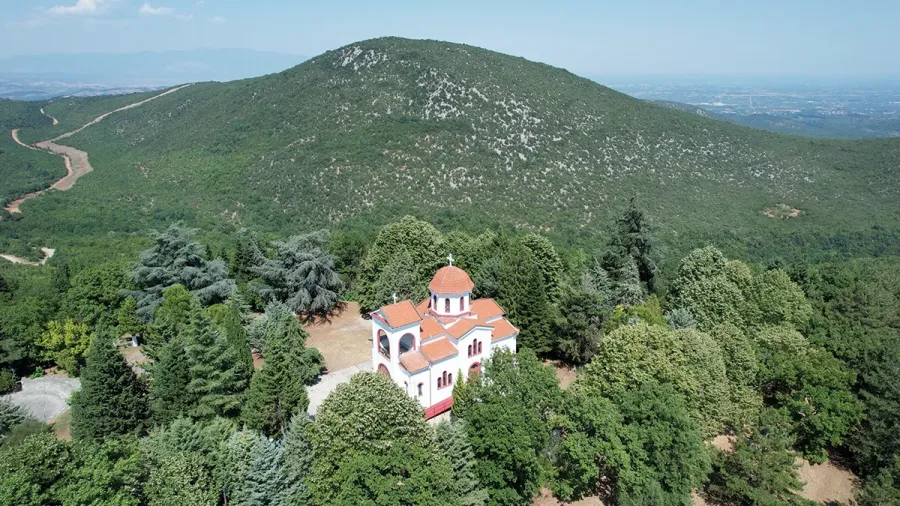
Founded in 752 AD, the Patriarchal and Imperial Monastery of Saint George Peristereotas stood on Mount Pyrgi, in the Galleaina area of Matsouka, approximately 30 km southeast of Trebizond. For more than eleven centuries, the Monastery played a vital role in shaping and preserving the Greek Orthodox Christian identity. Renowned for its remarkable library and significant ecclesiastical treasures, its holdings were dispersed across the world following the monastery’s destruction.
In 1923, the remaining monks made their way to Greece, sharing the fate of the rest of the Greek population. In 1968, the Monastery of Saint George Peristereotas was re-established in Rodochori, near Naoussa, in an idyllic, lush green setting covering an area of 200 acres.
Alongside the church, a three-storey guesthouse offers facilities for cultural and scientific events. Rodochori is home to part of the monastery’s sacred treasures, including the icon of Saint George, two marble colonnades from the sanctuary, and the relics of six saints.
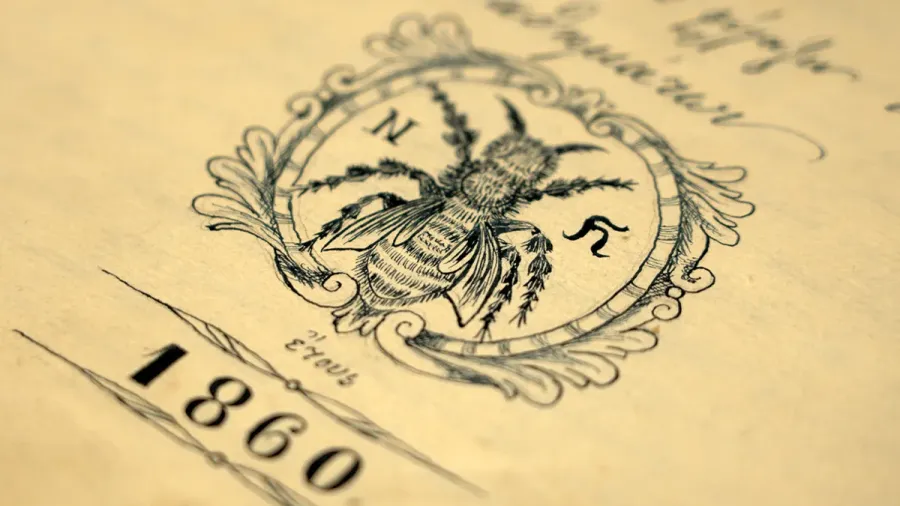

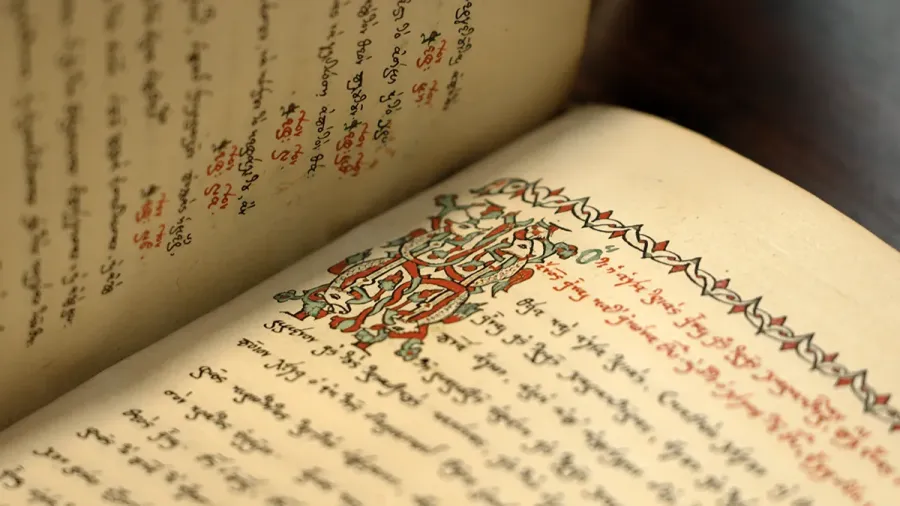

The “Kyriakidis” National Library of Argyroupoli stands as a living monument to the cultural heritage of the Pontic Greeks. Within a carefully curated space, 974 volumes of manuscripts, incunabula and early printed books are preserved - rare works rescued from the renowned School of Argyroupoli during the period of displacement and the genocide of the Pontic Greeks.
The collection includes precious works by ancient Greek authors, rare editions from some of Europe’s most distinguished printing houses, and other exceptional artifacts of the period. The manuscripts and rare books are true works of craftsmanship, offering valuable insight to researchers and history enthusiasts.
More than a collection of books, this remarkable treasure serves as a bridge between the past and the present, preserving the living memory of one of the most important cultures of Hellenism.
To fully experience this unique collection, guided tours of the Library’s historical archive can be arranged. Step into a world of history, knowledge and enduring memory.

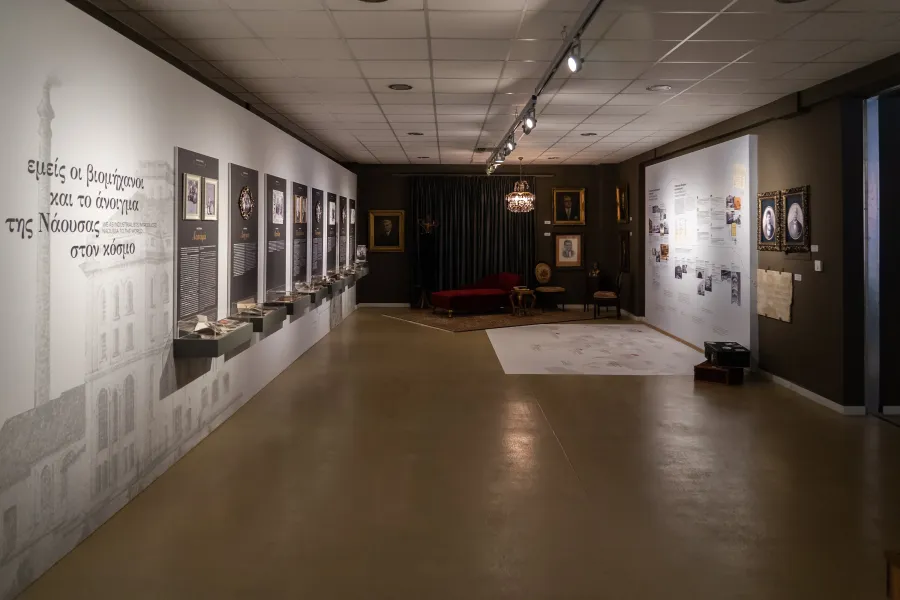

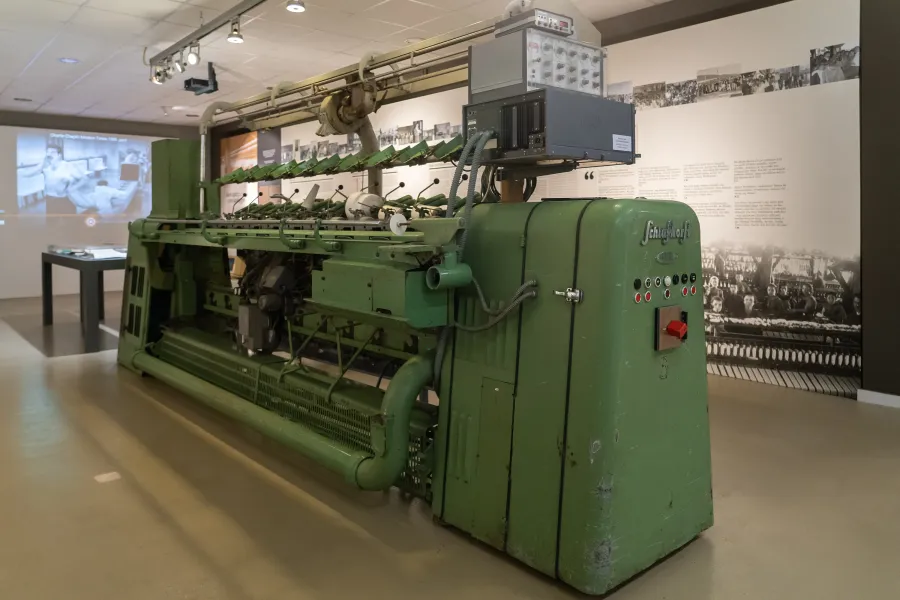
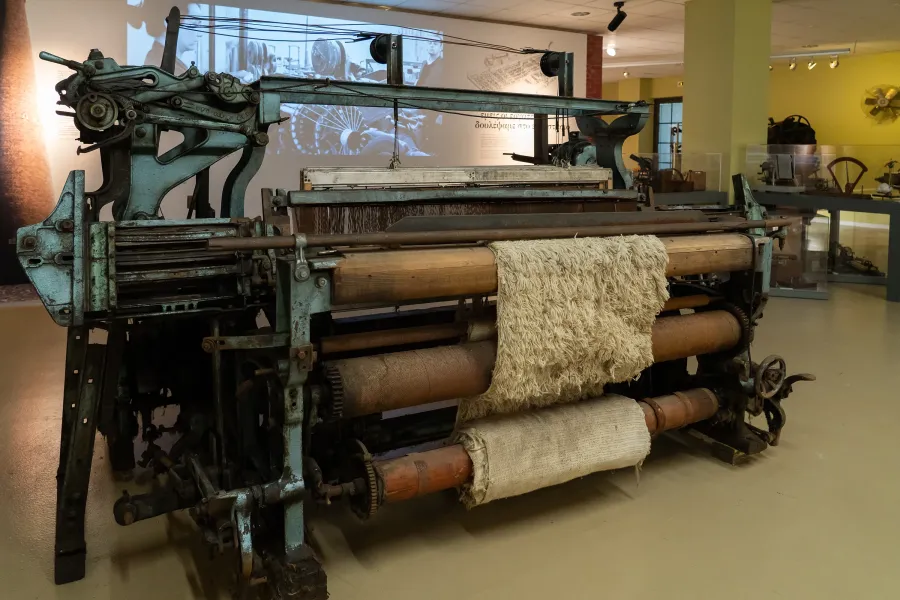
The Industrial Heritage Centre – ERIA of the Municipality of the Heroic City of Naoussa hosts a permanent exhibition titled “Threads of History: The Textile Industry of Naoussa.” Located in the former industrial complex of the ERIA company- later part of the well-known VETLANS textile factory-the Centre stands next to the Arapitsa River.
Naoussa was often referred to as the “Manchester of the Balkans,” having developed into a major textile hub during the 19th and early 20th centuries. Thanks to its numerous water-powered factories and the low-cost energy provided by its rivers, the city emerged as the leading textile center in Southeastern Europe. This industry played a key role in shaping Naoussa’s rich history and ongoing development.
Through sound, image and narrative, visitors are invited to explore the full story of the city’s textile industry, from the beginning to its final phase.


The Greek State awarded Naoussa the honorary title of “Heroic City,” recognizing the magnitude of the struggle and sacrifice of its people.
The events leading up to the city’s destruction have been recorded in history as moments of courage, bravery, heroism, and unwavering faith, but also of profound brutality.
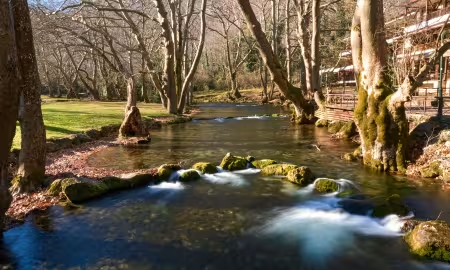
Among the most moving chapters is the self-sacrifice of the women of Naoussa, who, in the rushing waters of the Arapitsa River, chose death over dishonor.


But plenty of:
Rich history, untamed nature,
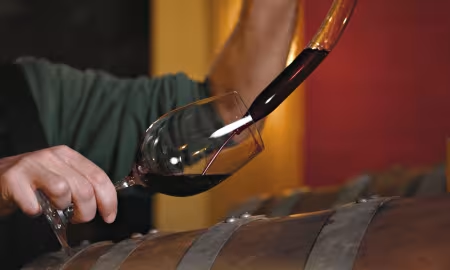
vibrant culture, and renowned wine.
You can’t miss it!